


A Missing Mode That Longtime Fans Can’t Ignore
Mario Kart World arrives on Nintendo Switch 2 as the most ambitious entry in the franchise’s history – expanded rosters, free-roaming exploration, and a course count that dwarfs any previous installment. Nintendo clearly went big. But for a vocal segment of the Mario Kart community, one absence is louder than any of those additions: Battle Mode is gone, and nobody at Nintendo seems to be talking about it.
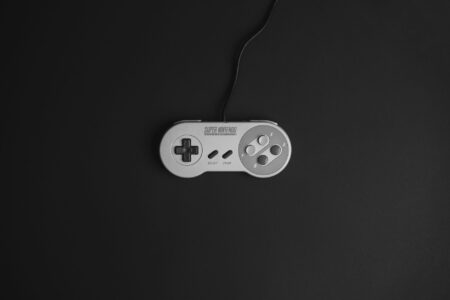
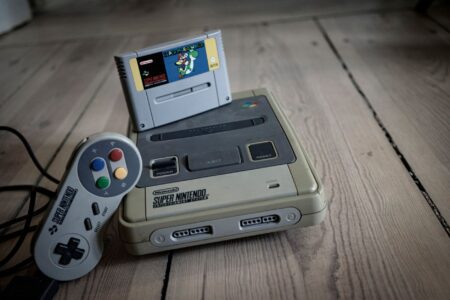
The omission isn’t trivial. Battle Mode has been a fixture of Mario Kart since the original Super Nintendo release in 1992. Dedicated arenas, balloon battles, coin runners, shine thief – these weren’t side features. For many players, particularly those who grew up with the series in the N64 and GameCube era, Battle Mode was the reason to gather four friends around a single screen. Stripping it out of a flagship launch title for a new hardware generation feels, to those players, like a deliberate downgrade dressed up as forward momentum.
What Battle Mode Actually Meant to the Series
There’s a tendency in coverage of Mario Kart World to frame the open-world racing as a straight replacement for older multiplayer structures. That framing misses why Battle Mode had its own identity. Racing, even in local multiplayer, is ultimately linear – you follow a track, you finish a lap, someone wins. Battle Mode threw out that structure entirely. The arenas were closed spaces designed for chaos, and the game types built around them rewarded spatial awareness and aggression over racing skill. It was a fundamentally different game running on the same engine.
Mario Kart 8 on Wii U launched without Battle Mode arenas, substituting races on standard tracks instead. The backlash was significant enough that when Mario Kart 8 Deluxe launched on Switch in 2017, Nintendo restored full Battle Mode with dedicated arenas as a headlining feature. That history matters. Nintendo already learned this lesson once. Watching the same decision surface in Mario Kart World, on a new platform with presumably more development resources, is frustrating precisely because it feels avoidable.
The arenas themselves carried a design philosophy distinct from the racing tracks. Battle stages like Block Fort, Pipe Plaza, and Wuhu Town weren’t just empty boxes – they were built with sight lines, chokepoints, and vertical layering that made them interesting to fight inside. That design vocabulary doesn’t translate to open highways or racing circuits. Coin Runners on a looping track is a distraction. Balloon Battle on a dedicated arena is an actual game.
Part of what made Battle Mode a community anchor was its accessibility to non-racing players. Someone who struggled to keep pace in Grand Prix could still dominate a balloon match through positioning and item timing. Removing that entry point narrows the appeal of local multiplayer in a way that’s hard to paper over with new character skins or additional race tracks.

The Open World Argument Doesn’t Fully Hold Up
Nintendo’s apparent design logic with Mario Kart World seems to be that the open-world Knockout Tours and expanded free-roam mode fill the social multiplayer gap that Battle Mode previously occupied. The argument has some surface appeal – free roaming with friends is genuinely new territory for the franchise, and the Knockout Tour format creates chaotic moments similar to the unpredictability of arena battles.
But open-road chaos and arena combat are solving different problems. Battle Mode’s appeal was containment – a bounded space where confrontation was guaranteed and the game explicitly rewarded combat over movement. Free-roam driving, however fun, disperses players across a massive map and rewards exploration over engagement. These aren’t the same experience, and presenting one as a substitute for the other doesn’t hold up under an hour of actual play.
Veterans Are Speaking Up, and Nintendo Should Pay Attention
Online communities dedicated to Mario Kart have been vocal since Mario Kart World’s full feature list became clear. Forum threads on Reddit and dedicated Discord servers show a consistent pattern: players who have been with the franchise since the 90s expressing genuine disappointment rather than casual complaint. This isn’t the usual pre-launch noise. People who defended Mario Kart 8 Deluxe as a near-perfect package are specifically pointing to the absence of Battle Mode as a regression that undercuts the “World” branding.
The Switch 2’s expanded hardware capabilities make the omission harder to excuse on technical grounds. There’s no obvious reason why dedicated battle arenas couldn’t coexist with the open-world structure – the game’s overall scope suggests this was a design choice rather than a capacity issue. Whether that choice reflects a deliberate vision or a feature that simply didn’t make the launch window is unclear. Nintendo hasn’t addressed it directly, which leaves the community to fill in the gaps with speculation. The Switch 2 launch period already has communication friction around new features confusing players; adding a notable absence to that mix doesn’t help.
What Comes Next Depends on How Nintendo Reads the Room
The Mario Kart 8 Deluxe precedent is either reassuring or maddening, depending on how you choose to read it. Reassuring because Nintendo has shown it will course-correct when Battle Mode backlash is loud enough. Maddening because that correction took a full hardware port and three years of players waiting. If Battle Mode returns to Mario Kart World, it will likely arrive as paid DLC or a free update timed to sustain player engagement – not as an apology, but as a product strategy.
Nintendo’s post-launch support for Mario Kart titles has historically been generous, and the Switch 2’s online infrastructure creates more avenues than ever to add content without requiring a disc swap. A Battle Mode update is plausible. What it won’t do is restore the experience of launching a flagship Mario Kart title with the full suite of modes the franchise built its reputation on.
For veterans who remember setting up four-player balloon battles on a single CRT in someone’s basement, the absence of Battle Mode in Mario Kart World isn’t a patch request. It’s a reminder that the series they grew up with and the series Nintendo is currently building don’t always want the same things. Whether a content update eventually bridges that gap, the conversation about what Mario Kart is supposed to be – a racing game, a party platform, or both – is one Nintendo will keep having to answer.