



Donkey Kong Bananza is not just another Nintendo platformer. Its fully destructible open world sets a structural expectation that puts the entire Mario franchise in an awkward position.
A New Bar for What a Nintendo Platformer Can Do
When Nintendo revealed Donkey Kong Bananza for the Nintendo Switch 2, the immediate conversation was about destruction mechanics – the ability to tear through terrain, collapse walls, and reshape environments in real time. What got less attention was the design philosophy underneath that: the game is built around an open world where player agency is baked into the physical structure of every level. You are not looking for a hidden path. You are making one.
That is a meaningful departure from how Nintendo has approached 3D platformers since Super Mario 64. Mario’s design language, refined across Sunshine, Galaxy, Odyssey, and their respective sequels, has always been about authored spaces. Nintendo builds a level, hides secrets within it, and rewards players for reading the environment carefully. The world is a puzzle that Nintendo designed and you solve. Bananza flips that contract – the world is material you work with, not a puzzle you decode.
The difference sounds subtle but plays out in ways that are hard to ignore once you notice them. Mario Odyssey remains a masterwork of density – every corner of each kingdom hides something placed there by a designer. That deliberateness is the point. Bananza’s terrain destruction makes deliberate placement harder to justify, because a player can simply bypass a designed obstacle by going through or under it. The game has to account for that. Mario never had to.
Nintendo is, in effect, running two parallel experiments in 3D platformer design, and they are pointing in very different directions. The question is whether those directions can coexist long-term without one eventually making the other feel dated.

Why Open Worlds Create Design Pressure
Open world design does something specific to player expectations: it recalibrates what “restriction” means. In a linear or semi-linear game, a locked door or a high wall is a design beat – something to return to later, a reward deferred. In an open world with destructible terrain, that same locked door starts to read as arbitrary. Why is this wall indestructible when the last twenty were not? Players will ask that question, and it becomes the designer’s problem to answer.
Bananza’s team is clearly aware of this tension. Early previews suggest the game uses layered geology – different materials with different resistance levels – to create soft barriers that feel physical rather than scripted. That is smart design. But it also means every future Nintendo platformer that does not offer something equivalent risks feeling like it is withholding freedom rather than offering a curated experience. That is a perceptual shift that is hard to undo once players have internalized it.
Mario’s existing formula has survived contact with open world expectations before – Odyssey launched a year after Breath of the Wild and held its own precisely because its design philosophy was so distinct. But Breath of the Wild was a Zelda game. Bananza is a Nintendo platformer. It sits in the same genre conversation as Mario, and it is making a stronger case for systemic freedom than any first-party Nintendo title in that space has made before.
The structural pressure also runs in the other direction. If Bananza’s open world approach proves commercially dominant – and early buzz around Switch 2’s launch window suggests it could move serious numbers – Nintendo’s internal teams will face a genuine question about what Mario’s next 3D entry looks like. Sticking with authored, contained kingdoms reads as a principled choice when you have no alternative. It reads differently when your own company has shipped a high-profile alternative in the same fiscal year.
There is also the matter of player vocabulary. A generation of players now understands open world traversal as a default. They know how to find the edge of a space and push against it. Bananza rewards that instinct. Mario’s design historically asks players to suppress it and trust the authored route. That ask is not wrong, but it is becoming a harder sell as Nintendo’s own catalog diversifies.
What Mario’s Next Move Might Look Like
Nintendo has historically solved this kind of internal design tension not by abandoning one franchise’s identity but by letting franchises talk to each other over time. Breath of the Wild’s climbing and physics systems did not show up in Mario overnight, but Odyssey’s movement sandbox was clearly in conversation with how players had started to expect freedom of motion. Bananza’s destruction mechanics are specific enough that a direct port into Mario would feel like a genre shift, but the underlying philosophy – build a world that responds to the player rather than one that only rewards reading it correctly – could influence Mario’s next entry in ways that are harder to trace directly.
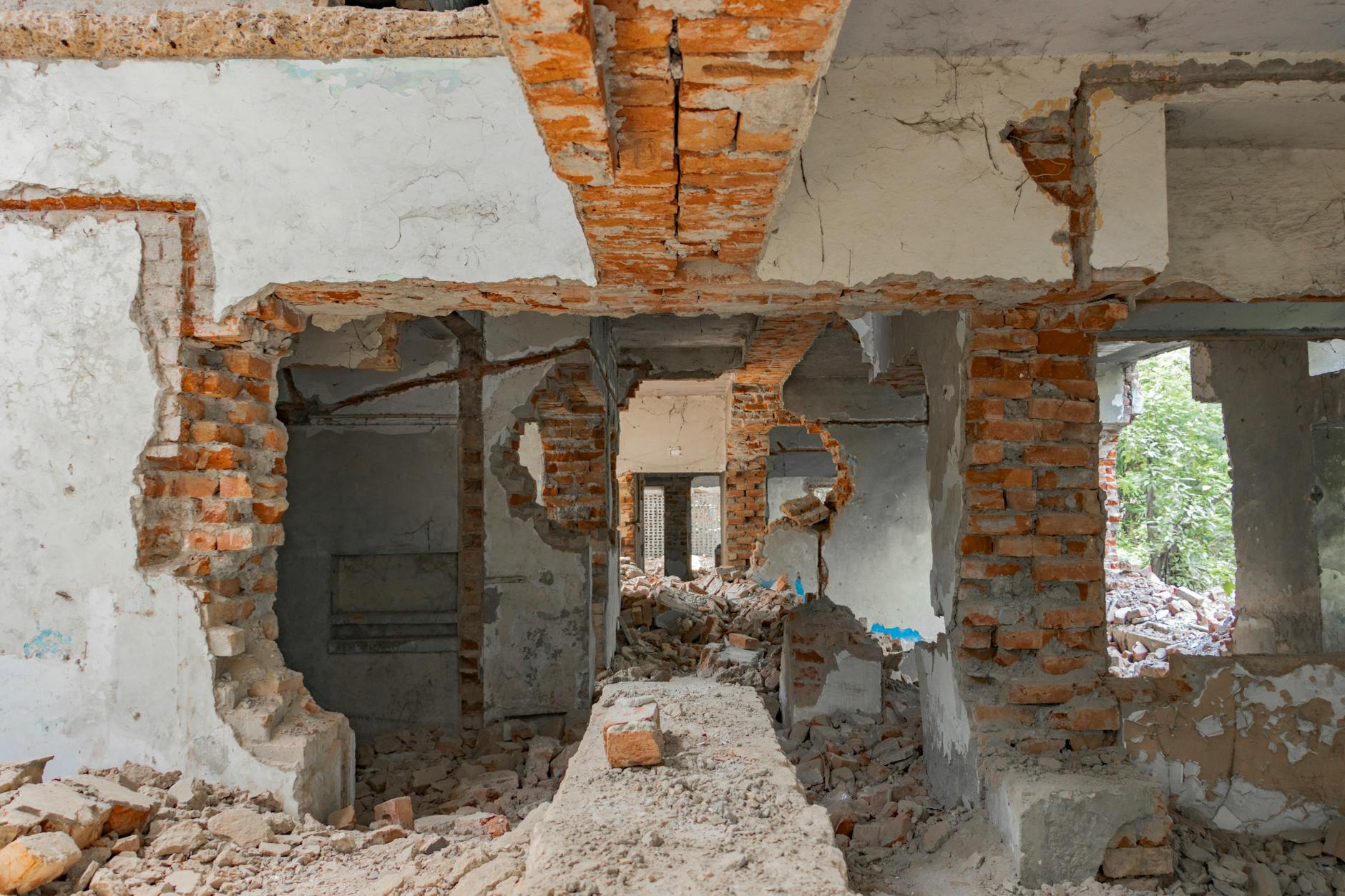
The more immediate pressure is on perception. When two Nintendo platformers release within the same hardware generation and one lets you punch through mountains while the other asks you to find the correct door, the contrast does not flatter the door. Nintendo has built its reputation on each franchise maintaining a clear identity, but identity is not static – and Donkey Kong Bananza is already rewriting what players expect a Nintendo platformer to feel like at a physical, tactile level. Mario’s next 3D outing will have to answer for that whether or not it ever touches a destruction mechanic.