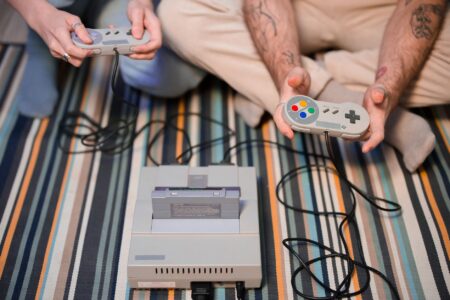



Nintendo’s surprise confirmation that Switch 2 will support backwards compatibility with original Switch games represents the company’s most calculated business move since the original Switch launch. While competitors regularly abandon their previous generation libraries, Nintendo is doubling down on preserving its massive software ecosystem-a decision that could reshape how the entire gaming industry thinks about console transitions.
The announcement comes at a pivotal moment for Nintendo, as the original Switch approaches 130 million units sold worldwide and boasts a software library exceeding 4,000 titles. Rather than forcing players to start fresh, Nintendo is betting that continuity will drive faster adoption of their next-generation hardware.
Protecting a Billion-Dollar Software Investment
Nintendo’s Switch game library represents unprecedented value for both the company and its customers. First-party exclusives like “The Legend of Zelda: Breath of the Wild,” “Super Mario Odyssey,” and “Animal Crossing: New Horizons” have sold millions of copies each, while the eShop houses thousands of indie and third-party titles.
Backwards compatibility ensures this massive catalog doesn’t become obsolete overnight. Players who’ve invested hundreds or thousands of dollars in digital purchases won’t face the choice between keeping their old console or losing access to their games. This approach directly contrasts with Sony’s PlayStation 5, which initially offered limited backwards compatibility, and Microsoft’s more comprehensive but technically complex backwards compatibility program.
The decision particularly benefits families and casual gamers-Nintendo’s core audience. Parents who purchased multiple Switch games for their children won’t need to repurchase favorites for the new system. Similarly, players who discover older titles years after release can still access them on current hardware, extending the profitable lifespan of Nintendo’s software catalog.
Third-party developers also benefit significantly from this decision. Indies and smaller studios that found success on Switch won’t see their games immediately relegated to “legacy” status. Instead, their titles remain relevant and purchasable on the newest Nintendo hardware, potentially extending sales cycles by years.
Learning from Past Console Transition Mistakes
Nintendo’s history includes several painful console transitions that likely influenced this backwards compatibility decision. The Wii U, despite housing excellent games like “Super Mario 3D World” and “Pikmin 3,” sold poorly and created a software library that remained largely inaccessible when Switch launched.
Nintendo eventually ported many Wii U exclusives to Switch-“Mario Kart 8 Deluxe,” “Donkey Kong Country: Tropical Freeze,” and “Super Mario 3D World + Bowser’s Fury”-but this required significant development resources and time. Backwards compatibility eliminates this expensive porting process while immediately providing Switch 2 with a substantial game library from day one.
The GameBoy family provides Nintendo’s best example of backwards compatibility success. Each new GameBoy iteration maintained compatibility with previous generation cartridges, creating seamless transitions that helped establish portable gaming dominance. Players could upgrade hardware while keeping their existing games, reducing the barrier to adoption.
Sony’s PlayStation 2 demonstrated backwards compatibility’s market power on home consoles. PS2’s ability to play original PlayStation games contributed to its becoming the best-selling console of all time. Players appreciated accessing their existing libraries while exploring new hardware capabilities, creating goodwill that translated into strong early adoption rates.
Competitive Advantage in the Handheld Market
Switch 2’s backwards compatibility becomes even more significant considering the growing handheld gaming market. Steam Deck and other PC handhelds offer access to vast existing game libraries, while mobile gaming continues expanding. Nintendo’s decision ensures Switch 2 competes with an immediately massive software catalog rather than starting from zero.
The timing aligns with Nintendo’s broader strategy of extending successful franchises across multiple platforms. How Mario Movie’s Success Is Driving Nintendo’s Animation Studio Expansion demonstrates Nintendo’s commitment to maximizing intellectual property value across entertainment mediums. Backwards compatibility serves this same goal within gaming-maximizing the value of existing software investments.
For competitive positioning, backwards compatibility addresses a key weakness Nintendo faced during previous generation transitions. While Xbox and PlayStation often launch with robust backwards compatibility or extensive digital stores, Nintendo historically forced clean breaks between console generations. Switch 2 breaks this pattern, potentially making it more attractive to players considering alternatives like Steam Deck or upcoming handheld PCs.
The decision also supports Nintendo’s family-friendly positioning. Parents researching gaming systems for their children will see Switch 2 as offering immediate access to hundreds of age-appropriate games, rather than waiting for new releases. This comprehensive library availability could drive holiday sales and gift-giving scenarios where immediate game variety matters.
Technical Implementation and Future Implications
While Nintendo hasn’t detailed the technical aspects of Switch 2’s backwards compatibility, the decision suggests significant internal confidence in their hardware design. Maintaining compatibility requires careful attention to processor architecture, memory systems, and software emulation-areas where Nintendo has historically excelled.
The announcement also signals Nintendo’s long-term platform thinking. Rather than viewing each console as a complete restart, they’re treating Switch 2 as an evolution of the Switch platform. This approach mirrors successful tech companies like Apple, where iPhone users can run apps across multiple device generations, creating sticky ecosystems that discourage switching to competitors.
This platform continuity strategy could extend beyond gaming into Nintendo’s growing digital services. Nintendo Switch Online subscribers will likely expect their memberships and associated retro game libraries to transfer seamlessly. Digital purchases, save data, and user profiles becoming persistent across hardware generations would represent a fundamental shift in how Nintendo approaches customer relationships.
Looking ahead, backwards compatibility sets expectations for future Nintendo hardware. Once players experience seamless game library transitions, they’ll expect similar treatment from subsequent consoles. This creates both an opportunity and obligation for Nintendo to maintain technical compatibility standards across future hardware iterations.
The decision positions Nintendo to better compete with PC gaming platforms, where game libraries persist across hardware upgrades indefinitely. While consoles traditionally required players to abandon previous generation libraries, Switch 2’s approach moves closer to the PC model of continuous backwards compatibility.
Nintendo’s backwards compatibility commitment for Switch 2 represents more than a technical feature-it’s a fundamental shift toward treating gaming platforms as persistent ecosystems rather than generational restarts. This approach protects customer investments, reduces adoption barriers, and provides immediate competitive advantages in an increasingly crowded handheld market. As other console manufacturers watch Switch 2’s reception, backwards compatibility may become the new industry standard for successful console transitions.
Frequently Asked Questions
Will all Switch games work on Switch 2?
Nintendo confirmed Switch 2 will support backwards compatibility with Switch games, though specific technical details haven’t been announced yet.
Why is backwards compatibility important for Nintendo?
It protects the massive Switch software library investment and removes barriers for players upgrading to new hardware.