


The Roster Problem Nobody Is Talking About
Mario Kart World is arriving with what Nintendo is positioning as its biggest character roster in franchise history. Across multiple Nintendo Direct presentations and pre-launch showcases, the company has made clear that playable character count is a central selling point – a parade of newcomers, deep-cut Mushroom Kingdom residents, and expanded variants filling out a grid that now dwarfs anything in the series’ past. It looks impressive on a feature list. Whether it actually makes the game better is a different question.
The mathematics of game development are unforgiving. Every new character model, voice clip, kart animation, and balancing pass requires time and budget that pulls from a finite pool. When a game expands aggressively in one direction, something elsewhere contracts – and in Mario Kart World, the pressure is falling squarely on retro tracks.
Retro tracks are not a bonus feature. They are half the game.
What Retro Tracks Actually Mean to the Franchise
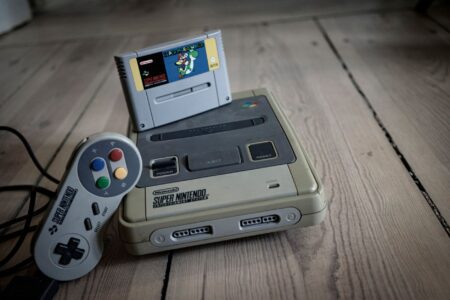
Since Mario Kart DS introduced the cup format that alternated new courses with remade classics, retro tracks have functioned as the franchise’s institutional memory. They are the reason a player who grew up with the Super Nintendo can hand a controller to their kid and say “I raced here.” Courses like Koopa Troopa Beach, Waluigi Pinball, and Rainbow Road from multiple eras carry emotional weight that no character unlock screen can replicate. The racing itself is the product, and retro tracks are a huge portion of what that product has historically delivered.
Mario Kart 8 Deluxe – arguably still the benchmark for the series – launched with 32 courses and eventually expanded to 96 through the Booster Course Pass. That expansion was not without criticism; some of the mobile-game-sourced tracks felt thin and undercooked compared to original 8 Deluxe content. But the sheer volume meant players had access to a sprawling library that rewarded long-term engagement. Mario Kart World, based on everything shown pre-launch, is not tracking toward that kind of breadth at launch. The new free-roam world structure is elegant, but it costs development time that used to go toward building and refining course count.
There is a specific texture to a well-remade retro track – updated lighting, reworked anti-gravity sections in MK8, redesigned shortcut geometry – that takes real investment to execute. If the development calendar is already compressed by the demands of building out a 30-plus character roster with all the associated content, the retro track list is where cuts become most tempting. A missing character is a complaint. A missing Maple Treeway or Wario’s Gold Mine is a complaint that hits differently, because those tracks represent replay hours nobody can get back from 8 Deluxe.
The Roster Inflation Is Not Coming Free
Adding characters to a kart racer is not as lightweight a task as it sometimes appears from the outside. Each new racer needs a kart configuration, weight class assignment, idle animations, voice lines, podium behavior, and integration into the game’s UI grid. When a roster grows from 42 characters to something significantly larger, that cumulative workload is substantial. Nintendo’s internal teams are skilled, but they are not infinite, and the Switch 2 launch window is creating external deadline pressure that shapes every production decision.
The characters being added to Mario Kart World are mostly welcome. Pauline’s inclusion alone generated genuine enthusiasm. But enthusiasm for a character sitting on the selection screen does not translate into enthusiasm for racing, not directly. Players who spend 200 hours with Mario Kart World will spend most of those hours on tracks, not on the character select screen. The roster is a marketing asset. The track list is the experience.
A growing number of longtime fans in pre-launch discussions have noted the imbalance – a roster that reads like a celebration of Nintendo history paired with a course selection that, at launch, may not honor that same history with equivalent depth. If the retro track count comes in noticeably lower than Mario Kart 8 Deluxe’s launch slate, the comparison will be immediate and unflattering, regardless of how many new faces are on the grid.
Free-Roam World Is Not a Substitute
Nintendo has leaned heavily on Mario Kart World’s open-world driving environment as a differentiator, and structurally it is genuinely new territory for the franchise. But it is worth separating what the open world offers – exploration, ambient driving, point-to-point routes – from what retro cups offer: tightly designed, competition-ready courses built around decades of player feedback. The open world is a complement to the race structure, not a replacement for it. Treating the two as interchangeable in a development priorities sense would be a misreading of what players actually come back for.
The retro track question is also a long-term content question. If Mario Kart World launches light on classic courses and Nintendo plans to supplement through DLC – either paid or through Nintendo Switch Online expansion tiers – then the real product is not what ships in the box. That model has worked for Nintendo before, but it shifts cost onto the consumer and delays the point at which the game feels complete. Mario Kart 8 Deluxe felt complete at launch. Its DLC felt like addition. The inverse – a launch that feels incomplete, remedied by post-launch content – is a harder sell at full Switch 2 pricing.

The character roster for Mario Kart World is genuinely exciting, and nobody is arguing otherwise. But if the final track count reveals that retro courses were quietly deprioritized to make room for that expanded grid, Nintendo will have traded something players race on every session for something they look at once and move past. Character selection is the door. The tracks are everything inside.