



The Shop That Isn’t There
Donkey Kong Bananza is shaping up to be a bold new direction for the franchise – a fully three-dimensional, destruction-heavy platformer that owes more to the Rare-era spirit than Nintendo might openly admit. But for players who came up through Donkey Kong Country, something is already nagging. Funky Kong’s shop, a fixture across the modern DKC revival games, is nowhere in the launch setup. No surf shack. No rental counter. No Funky.
That absence isn’t just a cosmetic gap. For a certain generation of DKC players, Funky’s shop was part of the rhythm of how these games worked – a reliable pitstop between brutal stages that offered upgrades, extra lives, and a personality break from the intensity. Stripping it out of Bananza’s structure changes something about the texture of the experience in ways that are hard to name but easy to feel.
What Funky’s Shop Actually Did for Players
The shop mechanic in Donkey Kong Country: Tropical Freeze and Donkey Kong Country Returns served a dual purpose that isn’t always obvious on the surface. On one level, it was a simple vendor loop – collect banana coins, spend them on items, continue forward. On another level, it gave players a sense of agency inside games that are otherwise very linear. You could decide when to invest in extra heart boosts or balloon lives, which made survival feel like something you managed rather than something that happened to you.
Funky Kong himself carried a lot of that energy. His surfer bro persona broke the visual and tonal monotony of jungle peril, and for younger or more casual players, his shop was also a low-pressure moment inside a game that could be genuinely punishing. The Tropical Freeze Nintendo Switch port made Funky playable as a full character with expanded health, which deepened his role from merchant to protagonist-adjacent figure. Pulling him out of Bananza entirely – even just his commercial function – collapses a part of the DKC formula that veterans internalized without realizing it.
Bananza’s Different Philosophy of Progression
To be fair to Bananza’s designers, the game isn’t trying to be Tropical Freeze 2. Its underground destruction mechanics and free-form excavation systems suggest a progression model built around discovery rather than preparation. Where the modern DKC titles asked you to stock up before a hard level, Bananza seems to want players burrowing through problems in real time. That’s a coherent design stance.
The problem is that coherent doesn’t always mean comfortable, especially for players whose muscle memory is calibrated to a different system. DKC veterans have spent years approaching hard sequences with a specific mindset: assess the stage, budget your resources, visit Funky if you’re running low, then commit. Bananza’s apparent removal of that loop doesn’t just change the mechanics – it removes a psychological checkpoint that experienced players leaned on more than they probably realized.
There’s also the question of what replaces it. Early looks at Bananza show banana coins and collectibles playing a role, and there appear to be in-world upgrade systems tied to the excavation mechanics. But scattered power-ups inside stages hit differently than a dedicated shop with a recognizable face behind the counter. The former feels like scavenging. The latter felt like planning.
This connects to a wider pattern in Bananza’s design: the game is trading familiar comfort structures for something rawer and more open-ended. That trade will likely work for new audiences coming in without franchise expectations. For DKC purists already stinging from other absences, it reads as another deliberate severance from the revival era’s DNA.
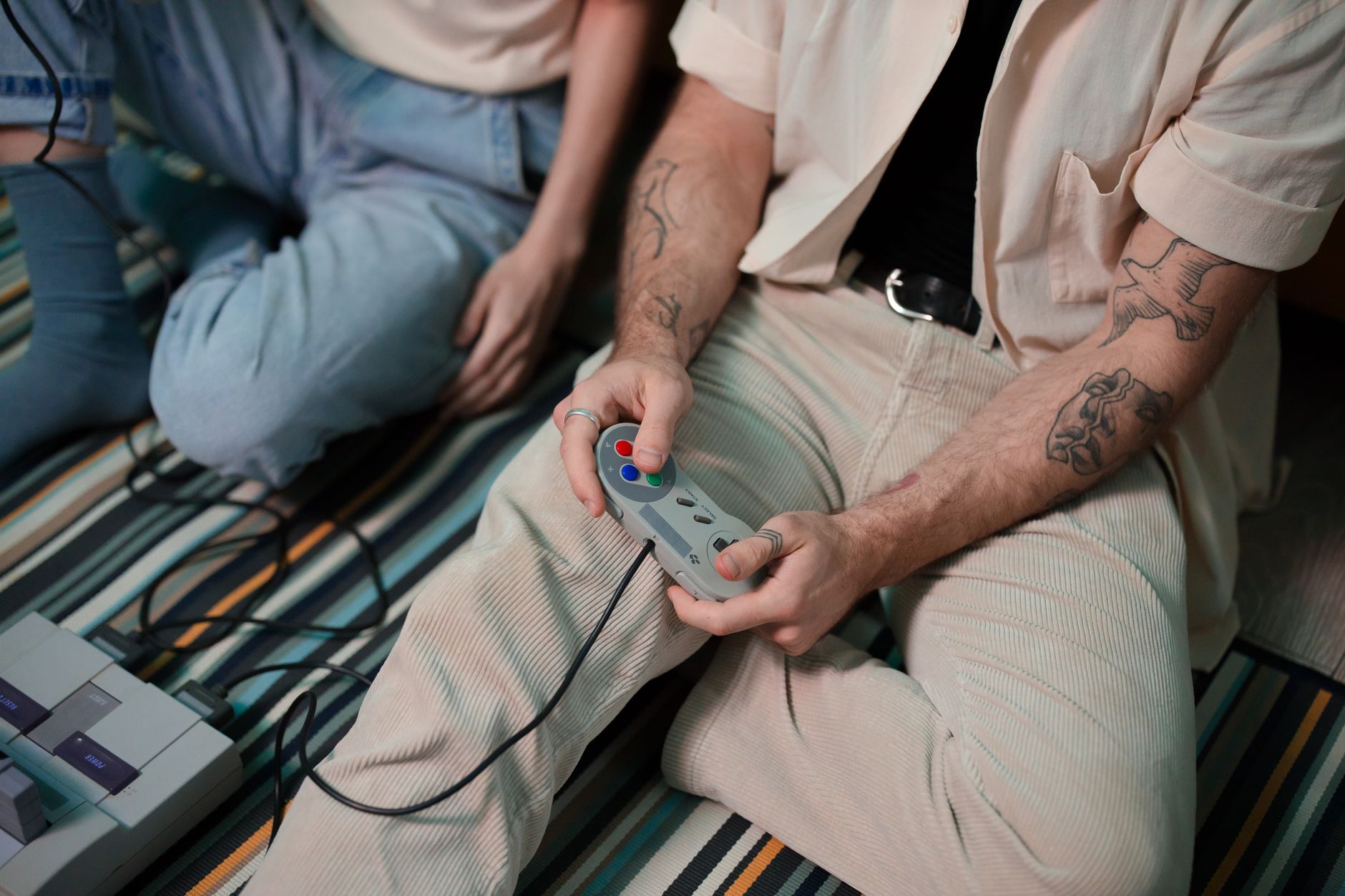
The Weight of a Running Gag Turned Tradition
Part of what makes Funky’s absence sting specifically – rather than just generically – is that he became more than a shop mechanic over time. He started as a quirky transportation NPC in the original Donkey Kong Country, evolved into a vendor, and then became a full playable character with a dedicated fanbase. His trajectory was one of the stranger ongoing character arcs in Nintendo’s catalog: a background joke who kept getting more significant by accident.
When a character reaches that level of franchise embeddedness, their removal stops feeling like a design decision and starts feeling like a statement. Whether Nintendo intends it that way or not, skipping Funky’s shop in Bananza signals that this game is building its own traditions rather than inheriting the revival era’s. That might be healthy for the franchise long-term. Right now, it just lands as a quiet erasure for the players who watched Funky level up one game at a time.
What Veterans Are Actually Asking For
The frustration around Funky’s shop isn’t really about the shop. It’s about whether Bananza sees DKC veterans as its audience at all, or whether it’s pitching itself entirely to players for whom Tropical Freeze is ancient history. Those two audiences want different things from a Donkey Kong game, and Bananza’s design choices keep landing on the side that treats the revival era as a detour rather than a foundation.
A shop doesn’t need to be Funky’s surf shack to serve the same function. It could exist inside a mining camp, a jungle outpost, a hidden cave. The aesthetic can change while the mechanical role stays intact. Bananza’s designers either didn’t see value in preserving that role, or they actively chose to remove it as part of the new direction. Either way, the absence is felt as a decision, not an oversight.
The specific sting here is that the shop wasn’t a gimmick – it was load-bearing. Players didn’t just appreciate it; they built their approach to difficulty around it. Bananza may end up being an excellent game on its own terms, but for veterans who learned to read a DKC game through Funky’s inventory screen, this version of Donkey Kong is already asking them to relearn something they thought they understood.