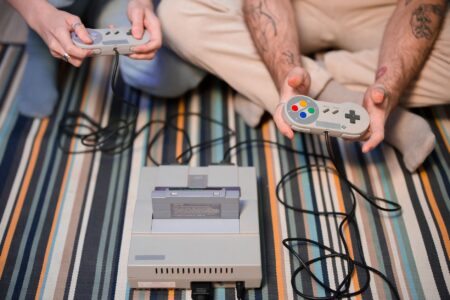




A Missing Feature That Hits Different for Long-Time Fans
Checkpoint Barrels are so woven into the fabric of Donkey Kong Country that removing them feels less like a design decision and more like erasing a landmark. Since the original 1994 SNES release, those red-and-white striped barrels planted mid-level have served as a lifeline – a silent acknowledgment that the game understood your frustration and met you halfway. In Donkey Kong Bananza, they’re gone. No barrel, no mid-level save point, no negotiation.
The absence is already generating friction in DKC communities online, where players who grew up with the series are noticing the gap more acutely than casual newcomers.
Nintendo’s approach in Bananza leans harder into the modern 3D platformer model, which typically handles checkpointing differently – through autosave triggers, collectible milestones, or level structure that naturally breaks into shorter segments. That logic works fine on paper. Whether it works for a fanbase that spent decades muscle-memorizing where each barrel sat in Gangplank Galleon is another conversation entirely.
What Checkpoint Barrels Actually Did for the Series
Beyond the obvious mechanical function – saving your position mid-level – Checkpoint Barrels carried a specific emotional rhythm. You’d blast through the first half of a difficult stage, hit the barrel, hear that satisfying pop, and feel the tension release slightly. The second half of the level could then push harder, throw faster enemies or more demanding jumps, because the game had already banked your progress. That design loop made longer levels feel fair rather than punishing.
Stages like Torchlight Trouble, Slipslide Ride, and Toxic Tower from the original trilogy are memorable partly because the checkpoint placement was surgical. Those barrels told you, without any UI text, that the developers knew where the difficulty spike lived. It was a form of communication between designer and player that the series refined across multiple entries. Donkey Kong Country Returns and Tropical Freeze both preserved that language, so players carried the expectation forward.
Bananza‘s departure from that system isn’t just a feature removal – it breaks a 30-year conversation. Fans who have written about the absence of classic DKC elements in Bananza have consistently pointed to the same root feeling: the new game looks like Donkey Kong, sounds like Donkey Kong, and carries the name, but keeps shedding the specific design choices that made the classic formula feel like home.

Why the Design Change Makes Sense – and Why It Still Stings
To be fair to Nintendo, Bananza is not a 2D sidescroller. It’s a 3D platformer built around environmental destruction, vertical exploration, and a level structure that doesn’t map cleanly onto the corridor-style stages where Checkpoint Barrels thrived. Asking the team to retrofit a barrel-based checkpoint system into open, destructible 3D spaces would require reimagining the mechanic almost entirely – and the result might not feel authentic to either the new game or the old one.
The 3D platformer genre has largely moved toward autosave systems because they can respond dynamically to player position and progress without requiring a physical in-world object. That’s a cleaner solution for freeform level design. It also, unfortunately, strips away the tactile satisfaction of physically blasting into a barrel and feeling the checkpoint lock in. Autosaves are invisible. They don’t announce themselves. There’s no pop, no visual confirmation, no moment of earned relief. They just happen somewhere in the background, and you either trust the system or you don’t.
For DKC purists, that trust hasn’t fully been established yet. The Checkpoint Barrel wasn’t just a save mechanic – it was a piece of iconography, as recognizable as the DK letters or the banana coins. Losing it alongside other missing series staples compounds the sense of displacement. It’s the accumulation that stings, not any single absence alone.
The Weight of What Gets Left Behind
Nintendo has built something new with Donkey Kong Bananza, and new things require new rules. But when a franchise carries 30 years of design DNA, every deliberate break from that DNA lands as a statement – even when the intent is simply to evolve. The Checkpoint Barrel question won’t derail the game. It will, however, keep echoing through communities where players still remember exactly which barrel saved them on the first run of Kremkroc Industries Inc., and whether Bananza will ever give them that specific feeling back.