



AMD’s RX 9060 XT arrived without a splashy press event or a flood of influencer embargoes. It landed quietly, priced to challenge NVIDIA’s grip on the $300-$400 mid-range tier – and that understated entrance might be exactly what makes it dangerous.
A Direct Challenge to NVIDIA’s Most Profitable Tier
The mid-range GPU market is where NVIDIA prints money. The RTX 4060 and RTX 4060 Ti have held that corridor almost unchallenged since their launch, offering decent raster performance and DLSS support at a price that feels just accessible enough to move units in volume. AMD’s previous attempts to crack that segment – the RX 7600 and RX 7700 XT – were competitive on paper but rarely compelling enough to pull buyers away from the NVIDIA ecosystem, particularly given how deeply integrated DLSS and Frame Generation had become in new game releases.
The RX 9060 XT changes that calculation. Built on RDNA 4 architecture, it brings hardware-accelerated ray tracing improvements that close the generational gap AMD had been dragging for two product cycles. More importantly, it ships with FSR 4, AMD’s machine-learning upscaler that now runs natively on RDNA 4’s AI accelerators rather than being approximated through shader cores. That distinction matters because it means FSR 4 on the 9060 XT performs materially better than FSR 4 on older AMD hardware – a point AMD’s own marketing has been careful to emphasize without overselling it.
NVIDIA’s RTX 5060 Ti entered the same price bracket around the same window, and the timing was not coincidental. NVIDIA clearly saw AMD building momentum at the mid-range and moved to defend territory early. But the RTX 5060 Ti launched with only 8GB of VRAM in its base configuration, a decision that drew immediate criticism from the PC enthusiast community. At 1080p that constraint rarely matters, but at 1440p – where most of this card’s buyers actually intend to play – certain modern titles are already brushing against that ceiling.
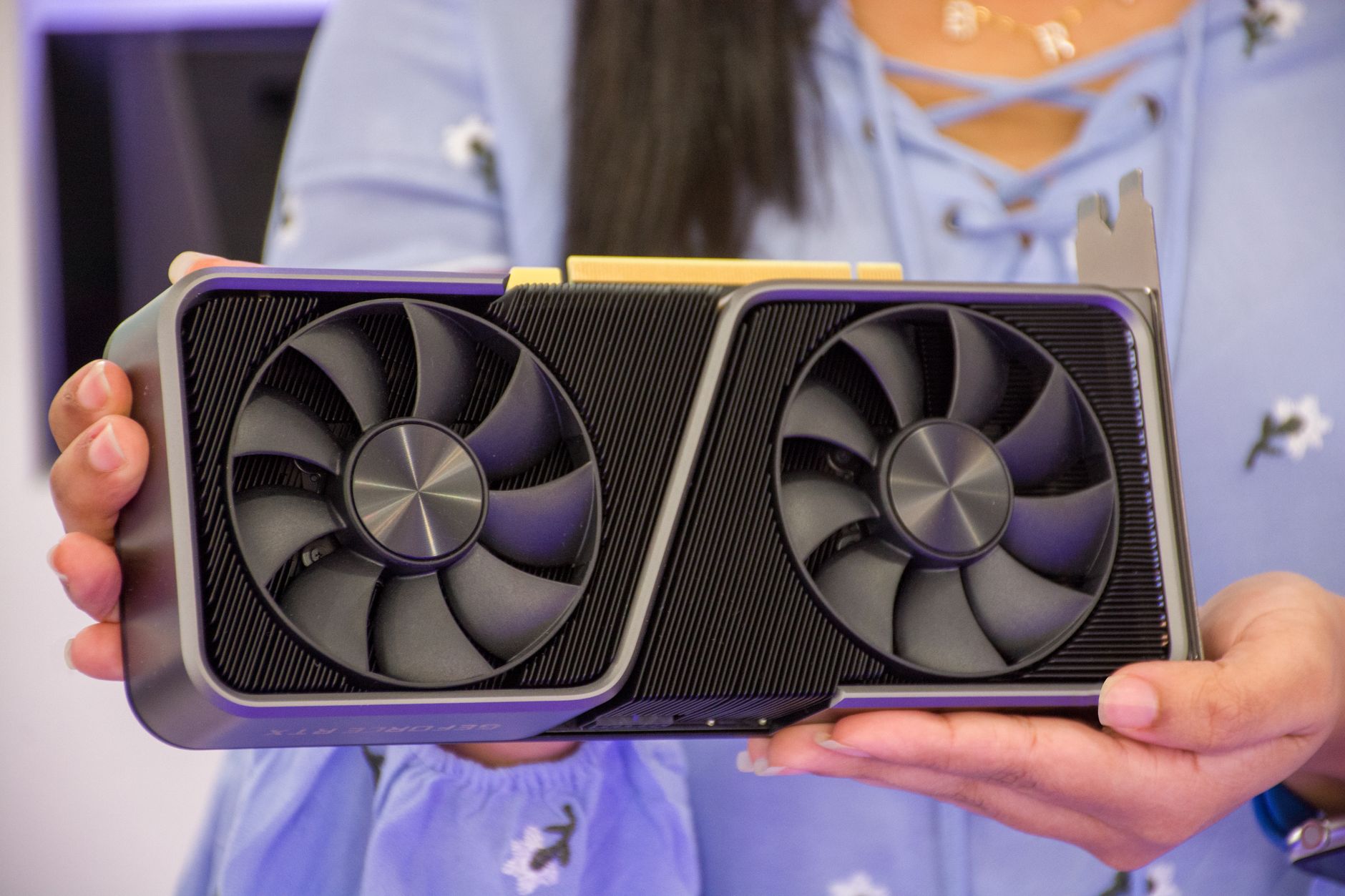
AMD equipped the RX 9060 XT with 16GB VRAM as standard. That single specification advantage has become the loudest talking point in GPU discussions since the launch, and it gives AMD a straightforward value narrative that doesn’t require nuanced benchmark analysis to land with mainstream buyers. You either understand VRAM headroom or you listen to someone who does, and either way the 16GB figure reads as a win.
Why This Launch Lands Differently Than AMD’s Previous Attempts
AMD has made competitive mid-range GPUs before. The problem was rarely performance – it was ecosystem. NVIDIA built DLSS into the workflow of enough developers that a meaningful portion of PC releases launched with DLSS support and added FSR only as an afterthought or not at all. That asymmetry made the performance-per-dollar argument for AMD cards feel theoretical; real-world gaming on certain titles gave NVIDIA cards an upscaling advantage that benchmarks didn’t capture cleanly.
FSR 4 changes that dynamic in a specific and important way. Because FSR operates as an open standard and doesn’t require proprietary hardware in the same locked-down sense that DLSS does, developers integrating FSR 4 can reach the full AMD and non-AMD player base simultaneously. AMD has been pushing FSR adoption aggressively through its developer relations program, and the list of titles supporting FSR 4 at or shortly after launch is notably longer than what FSR 3 commanded at a comparable stage. That momentum is not guaranteed to continue, but it has shifted the opening argument.
The RX 9060 XT also benefits from timing in the broader GPU market. GPU prices have been elevated across the board following supply disruptions, and buyers in the $300-$400 range are more price-sensitive than premium buyers. Every dollar of perceived value carries more weight here. When NVIDIA’s competing card ships with half the VRAM at a similar price, the conversation doesn’t stay technical for long – it becomes a headline, and AMD’s headline is cleaner.
There’s also a structural advantage in where AMD is selling. Retail availability at launch was reasonably healthy, avoiding the paper-launch criticism that plagued several prior AMD GPU releases. Cards appeared on shelves and in stock at major online retailers without immediate sellouts, which matters for brand credibility among buyers who remember hunting for inventory that never materialized. A card people can actually buy is a more persuasive product than a card that exists primarily in review coverage.
What AMD still hasn’t fully solved is software. Adrenalin, AMD’s driver suite, continues to generate occasional compatibility complaints and lacks some of the quality-of-life features that NVIDIA’s GeForce Experience ecosystem has refined over years of iteration. For enthusiasts building a system from scratch, this is a known variable they can manage. For buyers upgrading from a previous NVIDIA card, the software transition can feel like a downgrade even when the hardware is a step up. AMD has improved Adrenalin meaningfully over the past two years, but parity with NVIDIA’s software layer remains a work in progress.
What This Means for NVIDIA’s Next Move
NVIDIA’s mid-range dominance was never really about having better hardware at every price point – it was about having better software, better developer relationships, and better brand momentum. The RX 9060 XT doesn’t dismantle any of those advantages outright, but it makes them feel smaller than they did six months ago. When the VRAM gap is this visible and this easy to explain, NVIDIA’s talking points about ecosystem value require more convincing to land.
The more interesting question is whether NVIDIA responds with a price cut, a spec revision, or a new SKU positioned specifically to neutralize the 16GB argument. Intel’s renewed push in the GPU space adds a third variable to a market NVIDIA once treated as a two-player game on its own terms. If AMD sustains the 9060 XT’s supply and holds its price line, NVIDIA may have to concede ground in the mid-range for the first time in several years – and that’s not a scenario they planned pricing strategy around.